Below is a short write-up on the architectural style of our house


Thursday, 14 June 2012

Engelenburg House Art Museum

An interesting little street in Arcadia
By Rob Colesky


Interior of Engelburg House


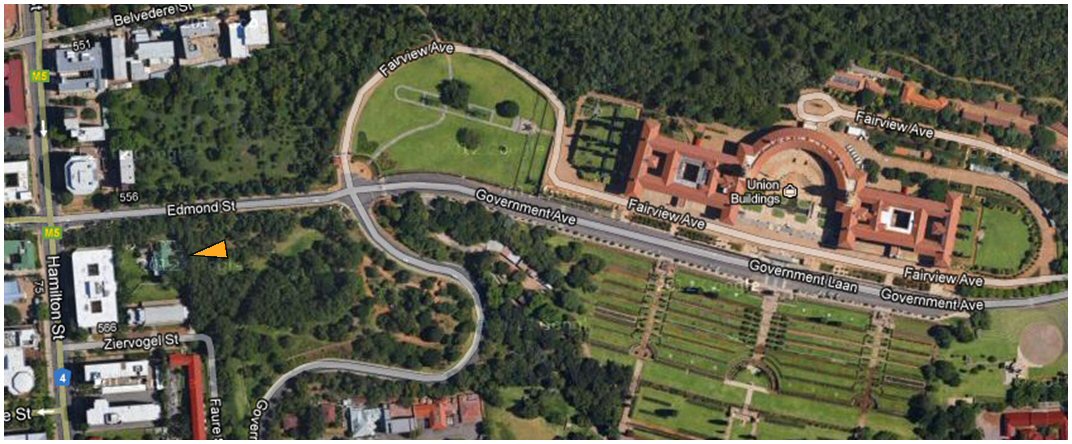
Location of Engelburg House
There is a short street leading off Hamilton Street, just after Edmond Street, that stretches a short way up the western side of the Union Buildings grounds, called Ziervogel Street. It’s a rather non-descript little street with a government building on the corner with Hamilton street, the Zambian Embassy dominating the middle of the block and the art museum, Engelenburg House, bordering up against the grounds of the Union buildings on the higher, Northern side of the street. There are two rather ordinary and somewhat rundown blocks of flats on the lower, Southern side.

Entrance to Ziervogel Street
As a short street, on the “wrong” side of the Union Buildings for me, there is very little reason to use this street but, by chance the other day, Hamilton Street was blocked with traffic and the opportunity to drive up Ziervogel Street presented itself as an opportunity to bypass the congestion. Surprised to find an Art Museum at the top of the street, the unusual name of the street and the suspicion that the street appears to have been an afterthought by the city planners I started wondering who this “Ziervogel” was and what the Art Museum entailed?

It was this curiosity which led me to the trusty internet and I was surprised to find that there is a reasonable amount of information available on both the Ziervogel family and Engelenburg House Museum.

Jeremias Frederik Ziervogel, was the patriarch of this branch of the Ziervogel family. Born 26 April 1802, in Cape Town, his parents died when he was still very young and he was raised by his aunt (his Mother’s sister) and uncle (coincidentally his Father’s brother) who also adopted his older brother, Carel Benedictus, and older sister, Christina Johanna. Jeremias Frederik Ziervogel’s father was originally from Sweden, emigrating to the Cape of Good Hope from Stockholm, in 1779.

On 1 March 1824, at the age of 21 years he married the 15 year old Anna Susanna Mar and together they had 7 children. He was a Bank Manager by profession and a prominent citizen of Graaf Reinet whom he later represented in The Cape Parliament from 1854-73. Retiring from Parliament, if not active politics, in 1873 Jeremias Frederik Ziervogel moved to Pretoria in order to establish a branch of the Cape Commercial Bank. His sons Carl Frederick (1825-1896), Jakobus Philipus (1827 -?) and his namesake Jeremias Frederick (1834 – 1905), the younger by now a medical doctor, accompanied him to Pretoria together with the younger members of the family.

In Pretoria the Ziervogel family lobbied the Transvaal government extensively, and successfully, for official appointments and soon became well-known in the South African Republic. The family at one time owned the farm Meintjieskop, having bought the farm from Edward Meintjies, son of the original owner of Meintjeskop, Stephanus Meintjes. It is ownership of the farm and the selling of the estate for the building of the Union Buildings which no doubt led to the street naming honour.

Interestingly, in 1875 Jeremias Frederik Ziervogel’s eldest son, Carl Frederik, bought the farm Leeuwpoort (in what is today Boksburg). He paid £75 for 300 morgen of barren, rocky veld. In September 1886, a young Afrikaans prospector, Pieter Killian discovered quartz reefs on Leeuwpoort.

Samples of the quartz were sent to Pretoria for assaying, which confirmed the presence of gold. The result was the proclamation, on the 10th March 1887, of the farm as public diggings. Carl Frederik, who had coincidentally been trying to sell Leeuwpoort till then, now opened the first gold mine on the East Rand, the Ziervogel Gold Mining Company. It is not known

exactly where on Leeuwpoort gold-bearing ore was discovered, but it is believed that it was somewhere along the stream that now flows from Boksburg Lake. Conglomerate rocks, some with visible rock drill holes, are still visible next to this stream today. Unfortunately heavy expenditure was necessary for development and, as the Directors were unable to finance this, the mine closed down. Mr Abe Bailey of the Barnato Group, which owned the Johannesburg Consolidated Investment Company (JCI), bought the farm Leeuwpoort in 1894 for £100,000 and established E.R.P.M. Ltd, which continues to mine the area some 117 years later.

Carl Frederick Ziervogel appears to have returned to Pretoria during the 1890’s, as did some other members of the Ziervogel family. He died in 1896 and is buried in the Church Street cemetery. Other members of the Ziervogel family appear to have remained in Boksburg where many of them successfully sought official positions in local Government. A later generation Ziervogel was also destined to become Major of Boksburg.

In 1903 a 39 year old Hollander Dr. Frans Vredenrijk Engelenburg bought the property (which stretched all the way down to Hamilton Street in those days) and on which the Art Museum, Engelenburg House, now stands from the widow Anna Christina Elizabeth Ziervogel. It was built in the Herbert Baker style but it is unknown if Sir Herbert Baker designed the building. It is well known that Baker and Engelenburg had immense mutual respect for each other. Engelenburg, a lawyer who had studied at the renowned University of Leiden in Holland, emigrated from Arnhem, Holland, in 1889, and was made Editor-in-chief of the Transvaal newspaper, De Volksstem, shortly after his arrival in the Transvaal. He was an acknowledged art expert and collector, a speaker of 6 foreign languages and known for his exquisite taste while Baker was a much admired and an acknowledged master architect. Th e gabled house Engelenburg built stood alone, in what was then, on the outskirts of town in Arcadia and was quickly named “Engelenburg’s Folly” by the locals. Only much later did the house become known as “Het Witte Huis” (The White House).

Engelenburg House
Today it is known as the Engelenburg House (Engelenburghuis). The varied and valuable art collection that is housed in Engelenburg House reflects Engelenburg’s artistic and cosmopolitan character. Part of the collection consists of heirlooms that were shipped to South Africa and transported to the interior. Most of the pieces were acquired by Engelenburg in his travels abroad while a number of pieces were also acquired at auctions. The collection consists, amongst others, of porcelain, glassware, paintings, silver, furniture, tapestries and several sculptures. This collection is currently on display in the museum, in his house where the windows are now closed with block-out blinds to protect the valuable collections from the harmful northern sun.

Engelenburg died in 1938 and bequeathed the house and land on which it stood to the Union of South Africa out of gratitude for the what the country had meant to him. A grant from Governor General EG Jansen of 2000 Pounds enabled the state to purchase a number of Dr Engelenburgs treasured art possesions from his estate and convert the house into a museum. Later the state donated the house to the ‘SA Akademie vir Wetenskap en Kuns’. In 1948 the Akademie took over the running of the house and Museum and the art collection in the house has remained largely unchanged.

The South western corner of the house was embellished with a memorial arch designed by Gerard Moerdijk in 1953.

The Engelenburg house Museum can be visited on appointment, Monday to Friday.
Contact Linda Brink on (012) 3285082.

A street in Groenkloof, Pretoria has been named after Dr Engelenburg.
Sources: http://able.wiki.up.ac.za http://boksburghistorical.com
http://akademie.org.za


This article was written by Rob Colesky and originally published in the ARRA newsletter of June 2012

Saturday, 14 January 2012

The 25 Greatest Porsches of All Time


Being the Porsche fanatic that I am I could not resist re-publishing this gem that I found in the Complex website. I felt compelled to share it. I must agree with the cars in their list, but I miss the 914-6, the 928GTS and some others.

Fasten your seat belts . . . here goes!!

Picking the greatest Porsches is like splitting hairs. All of them are excellent on some level. But some have become legendary, and a handful of modern models are destined to become classics. With the help of Dave Engleman, media relations manager for Porsche in North America, we have highlighted 25 models for their impact on the company, on racing, and on the history of the automobile. We ranked 10 race cars, followed by 15 road cars, rather than mix apples with oranges. We did not consider cars from tuners like RUF, nor ones still under development, such as the 918 Spyder. The latest 911 looks like a winner, but it's not ranked either, because it was just released, and it has to prove itself over the long haul. As hard as we tried to be circumspect and all-inclusive, this list will certainly spark debate. We welcome it.

25. 911 GT1-98

Year: 1998
In 1998, this car won the 24 Hours of Le Mans—a grueling endurance race that is the holy grail of motor sports—not because it was faster than competitors like the legendary Mercedes-Benz CLK-GTR, but because it was more reliable. It placed first and second overall and solidified Porsche's reputation for building bullet-proof race cars. Although a road version was created to satisfy homologation rules, the GT1-98 was a purpose-built prototype with a 3.2-liter, mid-mounted 6-cylinder engine that put out 592 hp.

24. 908

Year: 1968-1971
The 908 was Porsche's foray into the upper reaches of prototype racing, which sought overall wins—not just class wins—at important races such as the 24 Hours of Le Mans. The 908 didn't achieve victory there, but in 1969, a long-tail, closed-top version—the 908 LH Coupe—came in second, behind a Ford GT40. Smaller, nimbler open-top versions, known as 908/2 Spyders, were suited to slower twisty tracks. They dominated other races in '69, sometimes sweeping the top five spots in a single race.


23. RS Spyder

Year: 2005-2010
The RS Spyder marked Porsche's return to prototype racing after it abandoned the pursuit in 1999. It was developed not for the top class of race cars, but for the slower LMP2 class. That's why its overall victory at the 2008 12 Hours of Sebring race—where it beat more powerful competitors—was so remarkable.


22. 911 RSR

Turbocharger
Year: 1973-1974
The RSR firmly established Porsche's commitment to turbocharging as an engineering strategy in motor sports. It also laid the groundwork for what would become a long-running tradition of racing 911s that are built on the same factory line as road-going versions. Today, classic RSRs easily command six figures.


21. 956 and 962

Year: 1982-1994
The 956 and 962 are among the most successful Porsches ever raced. Factory-backed 956s swept first, second, and third places at the 1982 24 Hours of Le Mans race. Porsche started selling the cars to privateers after that, until noted German driver Stefan Bellof died at age 27 after crashing one in 1985. The 962 was subsequently developed to improve safety. It was slightly longer, with the front wheels set further forward, so that the driver's feet weren't positioned ahead of the centerline. Like its predecessor, the 962 was hugely successful

20. 911 (997) GT3 RSR and other racing variants

Year: 2005-Present
Each generation of 911 has an internal name to distinguish it from the others. The 997 is ending production to make way for a new generation, the 991. Whereas purpose-built race prototypes were often the pinnacle of Porsche racing in the past, the 911-based GT3 race cars have been the company's main focus in motor sports over the last decade or two. The 911 GT3 in its various racing forms is one of the most successful race cars in history. The number of class and overall wins it has earned is staggering. Even more incredible is that it starts life on the same assembly line that builds road-going Porsches

19. 718 RS 60 Spyder

Year: 1960
The 718 RS 60 Spyder is an evolution of the 550 Spyder, a sports car for the street discussed further up the list. Rather than having an engine behind the rear wheels, like on a 911, its small four-cylinder engine is just ahead of the rear wheels. This is a “mid-engine” setup, and it was used on other Porsche race cars, such as the 965, 962, and GT1-98. The 718 RS 60 was light, nimble, and efficient—besides being gorgeous. Among its competitive accomplishments was an overall victory at the 1960 12 Hours of Sebring endurance race.

18. 911 GT3 R Hybrid

Year: 2010-present
Don't be fooled by the term “hybrid” in this car's name. It is a beast. So much so that racing governing bodies are grappling with how to change rules in order for it not to have an unfair advantage. You see, other race cars don't have a 102-hp electric motor powering each front wheel. That's in addition to the 480-hp six-cylinder gasoline engine at the rear. The 911 GT3 R Hybrid is a game changer.


17. 917K

Year: 1970-1971
The 917 is one of the most legendary race cars of all time. Porsche built it expressly to dominate motor sports. And that it did, but not without a rocky start in 1969. It wasn't until a shortened version of the race car with a reworked rear end, called the 917 Kurzheck (“short-tail”), or 917K, was developed that it clinched first and second places at the 24 Hours of Le Mans, in 1970. It was also notable for being the first Porsche with a 12-cylinder engine.
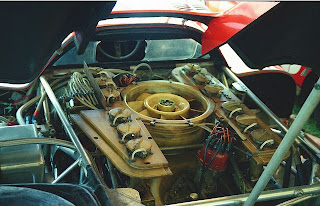
Porsche 917 engine


16. 917/30 

Year: 1972-1973
Porsche shifted its attention to the North American Can-Am Challenge in 1972. So the 917 morphed into an even bigger beast. Its 12-cylinder engine was enlarged and enhanced with twin-turbochargers. Max output was up to 1,580 hp, though it usually ran in races with less than that. It could go from 0-62 mph in 1.9 seconds and on to 100 mph in 3.9 seconds. Top speed was more than 260 mph. It absolutely dominated the 1973 Can-Am season.
Porsche 917 turbo chargers and gearbox


15. 911 3.2 Carrera

Year: 1984-1989
Now the list shifts from race cars to road cars. The Porsche that many people think of when they're asked to picture a 911 is the one that ran nearly unchanged in terms of looks from 1974 all the way through 1989. The 911 has evolved slowly but steadily over years. The 3.2 Carrera—particularly the 1989 model, which was this generation's last year of production—is the pinnacle of classic-looking Porsches, having benefited from many incremental improvements over more than a decade. After 1989, things started to change more dramatically for the 911, so purists who seek the ultimate in old-school Porsche engineering and styling often look to the later years in this generation of 911.

14. 944 Turbo

Year: 1985-1991
Purists say that the engine should unequivocally go in the back of a Porsche. But with the 944, the company proved it can build a killer front-engine sports car just as well. The 944 is a 1980s icon that is so good in terms of driving performance that it’s still being raced at an amateur level in Sports Car Club of America events. The turbo model really kicked the performance of its four-cylinder engine way up. The 944 Turbo, with its wider body and special bumpers, looked pretty badass at the time, too. In fact, it still does.

13. 911 Carrera RS

Year: 1973-1974
To casual onlookers, it might seem as if decades pass with little change to the 911. Yet, what might appear to be just a “run of the mill” 911 is often rare—like the Carrera RS. Two things help make it among the most desirable classic 911 models ever: 1) It was built so that Porsche could enter a race series that required a minimum number of road cars of the same type, and as such it had the most powerful engine to date of any Porsche 911. 2) Shortly after it came out, Porsche changed—or sullied, many say—the look of the 911 with larger bumpers.

12. 911 (993)

Year: 1993-1998
The Porsche 911, known internally as the 993, was an important stepping stone for the company. It ushered in a new era of styling and chassis engineering, although it held fast to some traditional 911 cornerstones that diehard fans adore—namely, the compact dimensions, upright windshield, and, most importantly, the traditional air-cooled engine architecture that traces back to the very first Porsches. Rear suspension geometry was a quantum leap over previous technology, taming many of the 911's deficiencies that stemmed from its rear weight bias. The 993 was the last of the so-called “air-cooled” Porsches, and for that reason alone, it is hallowed by many.


11. 911 Turbo S (997)

Year: 2010-Present
Porsche 911 Turbos are special—and ones with an “S” on them, even more so. The Turbo S has 30 hp more than regular Turbo models, for a total of 530 hp. It comes with the company's seven-speed, dual-clutch transmission. Until the next generation (991) Turbo S comes out, this one is at the top of the heap, barring the truly hardcore GT models which, of course, are on this list.


10. Boxster Spyder

Year: 2010-Present
The Boxster Spyder is perhaps the purest of all modern Porsches. It is not the most powerful or technologically advanced, but it's certainly the lightest and most uncomplicated. It recalls the classic 550 Spyder and 356 Speedster, featured higher up on this list. Basically, it's a lightened and more potent Boxster that eschews creature comforts—folding soft top, stereo, air conditioning, cupholders—in favor of a more visceral driving experience. In terms of balance and weight distribution, its mid-engine layout is inherently better than the rear-engine setup of Porsche 911s. Thus, the Boxster Spyder is the ultimate open-top Porsche for driving enthusiasts.


9. Cayman R

Year: 2010-Present
The Cayman is the closed-roof equivalent of the Boxster. To many, it surpasses the 911 because its mid-engine layout allows better weight distribution. The Cayman is so good that Porsche has been very careful since it launched in 2005 not to let it eclipse the 911 by reserving the most powerful engines only for the 911. The Cayman R comes close to unseating its bigger brother. It applies the same weight-saving principles as the Boxster Spyder to improve driving dynamics, but has a more rigid chassis. And it gets 10 hp more, besides.


8. 911 GT2 RS (997)

Year: 2011
The 911 GT2 RS is the most powerful production 911 in history. It is the culmination of 50 years of Porsche engineering progress. The standard GT2 has the same output as a Turbo S—530 hp—but has a stripped-down interior and numerous improvements to make it better suited for track driving. The GT2 RS is even more extreme. It weighs 150 pounds less than a “regular” GT2 and adds 90 hp, for a total of 620 hp.


7. 911 GT3 RS 4.0 (997)

Year: 2011
The GT3 RS 4.0 is arguably the best modern 911 ever. While the Carrera GT is more exotic and the turbocharged GT2 RS is more powerful, the 500-hp GT3 RS is raw and closer to real Porsche race cars in terms of engineering. That's because current racing regulations make it unfavorable to run turbos. Thus the non-turbocharged GT3 RS is, for all intents and purposes, a street-legal Porsche track car, with race-spec suspension, chassis, brakes, and engine. The latest 4.0 version has a slightly larger engine than the “regular” GT3, which gives it an additional 56 hp.


6. 550 Spyder

Year: 1952-1956
If there is one Porsche that can be considered ground zero for the company's now legendary racing heritage, it is the 550 Spyder. Based on the 356, it started as a road car and evolved into a purpose-built race car—the 550A. Unlike the rear-engine 356, the 550 Spyder uses a mid-engine layout, which makes it handle far better. Only about 90 were produced. Some call it the "giant killer," for its ability to beat larger, more powerful race cars. Besides winning, it is known infamously for being the car that actor James Dean died while driving on Sept. 30, 1955


5. Boxster (986 & 987)

Year: 1996-present
The lowly Boxster—internally designated the 986—helped save Porsche from bankruptcy in the mid-1990s. It uses the same mid-engine architecture as the 550 Spyder and remains one of the best sports cars of all time, with better inherent driving dynamics than the 911. Early models were underpowered and had shoddy interiors. Porsche fixed the former with a more potent S model in 2000, and the latter with a thoroughly updated new version of the car in 2005, known internally as the 987.

Year 2012: The new Porsche Boxster


Porsche has embarked on its most comprehensive model change to date and it's evident in the all-new Boxter.

The open-top two-seater now has a completely new lightweight body and a completely revamped chassis. Together with its longer wheelbase, wider track and larger wheels, the mid-engine Boxster's driving dynamics, which is already the best in its class, is enhanced even further. Other changes to the Boxster are its shorter overhangs, significantly forward-shifted windscreen and a flatter silhouette.

Powering both the Boxster and the Boxster S are a flat-six engine with direct port injection with its efficiency enhanced further by electrical system recuperation, thermal management and start/stop function. A 2.7-liter, 265hp engine is utilized by the standard Boxster while the Boxster S has a 3.4-liter mill that puts out 315hp.

Both models feature a manual six-speed gearbox as standard with the seven-speed Porsche Doppelkupplungsgetriebe (PDK) available as an option although according to Porsche, both sports cars achieve their best fuel consumption and acceleration performance with the PDK.

Porsche said the all-new Boxster is 15 percent more fuel efficient than its predecessor. Depending on the variant, its fuel consumption is at least less than eight liters of fuel for every 100 kilometers.

With the PDK, the Boxster's fuel consumption is at 7.7 liters for every 100 kilometers (12.987km/L) and its zero to 100kph sprint time is at 5.7 seconds. As for the Boxster S, its fuel consumption figure is 8.0 liters for every 100 kilometers (12.5km/L) while its zero to 100kph time is at 5.0 seconds.

The all-new Boxster officially goes on sale globally on April 2012. It will be in South Africa by June 2012. I cannot wait to see it!


4. 911 Turbo (930)

Year: 1975-1989
The original 911 Turbo, known internally as the 930, was conceived as a road-going version of a race car to satisfy regulations that required a certain number of production cars be built. Although it spawned an entire generation of Porsche race cars, its true success was in how it enabled the company to better compete with pricier and more exotic Ferraris and Lamborghinis. The 930 was a revelation: a 911 on steroids. A single turbocharger gave a huge boost in engine output. Unlike the smooth, predictable performance of modern Porsche turbos, the 930 had the disposition of Dr. Jekyll and Mr. Hyde. Turbo boost had an on-off switch—it was all or nothing—and it could easily unsettle the tail-heavy car. This danger and unpredictability made the 930 all the more alluring to many enthusiasts.

I was fortunate enough to own one of these monsters. I am still going through the berievement process as I sold it about 3 months ago. I loved it and my wife hated it!


3. 959

Year: 1986-1989
The Porsche 959 came out of nowhere to shock and awe the world. It was eons ahead of its time, with innovations like sequential turbocharging, lightweight composite body panels, and even tire pressure monitoring, which is now on every vehicle. It proved the importance of all-wheel-drive not just for off-road applications, but in high-speed super cars going fast around a race track. After the 959, every 911 Turbo would have all-wheel drive. Although the 959 has since been surpassed, it will always remain a crowning technical achievement for Porsche.


When Porsche began development of the 959, it looked toward Group B racing as a road-racing laboratory with which to develop technology for  production cars. When Group B became focused on rallying events, however, Porsche felt the relevance to production cars was greatly reduced, and the goal of the 959 project shifted to frank state-of-the-art, cost-no-object technological innovation.
In 1984, however, three 911s modified to 959 specifications (due to the requirement that Group B cars be based on production cars with at least 200 built) were used in the Paris-Dakar Rally, with Jacky Ickx the prime motivator. By 1985 the 959 rally variant was ready, but it experienced a disappointing start: all three cars failed to finish. However, in 1986 the 959 finished 1-2.

2. Carrera GT

Year: 2004-2006
One car that surpasses the 959 is the Carrera GT. Made out of shelved racing parts from a still-born Porsche motor sports program in the late 1990s, the Carrera GT is the most extreme production Porsche ever built. It proves that if the company wanted to, it could quite possibly beat the Italians at their own game of building super-exotic sports cars. The Carrera GT has a 612-hp V10 mounted just ahead of the rear wheels, instead of just behind them, as on the Porsche 911. It cost $440,000 when it came out in 2004. Less than 1,300 were built. Actor/comedian Jerry Seinfeld, a noted Porsche enthusiast, wrote a review of it for Automobile magazine when it debuted.


1. 356 Speedster

Year: 1954-1957
The 356 Speedster is a Porsche in its purest form. It was a stripped-down 356 that sold for less than regular Porsches and was created solely for the U.S. market. There were no side windows. The folding top was rudimentary. Even a heater cost extra. It was the ultimate statement of driving for the sake of enjoyment. It helped Porsche gain a stronger foothold in the U.S. at a time when British sports cars were dominating. The 356 Speedster was an instant success, and to this day it remains one of the most iconic and collectible Porsches ever produced.

The web page this was reproduced from can be found here


Tuesday, 3 January 2012

De Loor's Brood en Banket Bakkers


471 Church Street


Hidden behind a secondhand car sale outlet in Church Street East is one of the last remaining structures of the industrial area of Arcadia.
There were building contractors (Dorlas and de Veer Streets), stone masons (Bailey Lane) blacksmiths and farriers, coach and wagon builders, bakeries, a saw mill and an ’aerated and mineral water manufacturer’.

Very little is left of our industrial heritage in this area and what is still there is hardly recognizable. An example is the double volume bakery building of de Loor’s Bread and Biscuit Factory as shown on their calendar of 1935.

Who was de Loor?

Johannes Hendrikus de Loor was born in Buren, Holland and immigrated to Pretoria in 1896 and bought the Wilhelmina-bakkery in Blood Street. He moved the bakery to Potgieter Street and later to the site of the Arcadia Flour Mills of which EPA Meintjes was the proprietor, and changed the name to de Loor’s Bakkery.

The double volume building on the right still exists. (Calender Bouwmeester-huisversameling)
De Loor became chairman of the Master Bakers Association in Pretoria. His son, Barend de Loor, was the late lector of statistics at the Transvaal University College and professor at UP.
JH de Loor passed away on October 14, 1929 and was laid to rest in the Rebecca Street Cemetery.

Funeral notice of Johannes Hendrikus de Loor. (Bouwmeester-huisversameling).
To honour this entrepreneur and his achievements a commemoration plaque, the so called ’blue plaque’ on the site would be commendable.

References:
Andrews T & Ploeger J: Street and Place Names of Old Pretoria. JL van Schaik, Pretoria. 1989.
Lochhead’s Guide, Hand-book and Directory, 1913.Ploeger Jan: Nederlanders in Transvaal 1850 – 1950. JL van Schaik, Pretoria. 1994.
Pretoria 1855 – 1955.
City Council of Pretoria. 1955.

Reproduced from a article by Anton Jansen in the March 2011 edition of The Arcadian

Anton Jansen 
Tshwane Buildings Heritage Association
HERITAGE AND RESTORATION CONSULTANT

Monday, 28 November 2011

Three Classic Courts in Arcadia


The suburb of Arcadia was established in 1889 and primarily developed as a residential area. In 1911, the area above Church street was subdivided into 87 erven by land surveyor J.H. Fehrsen.  During the 1930’s three medium-high residency buildings were erected in the area in response to the urbanisation of the rural population of Pretoria.

The three historical buildings namely, Clarendon  Court, Twentyman Court and Savoy Court have not lost their original character and style. All three buildings were built in the colonial style and enclose  a courtyard. Tenants are often surprised to find the beautiful flats, with original wooden floors and fireplaces, in the centre of Arcadia among all the high-rise apartment blocks.

Clarendon Court
Clarendon Court – 1929 162 Eastwood Street (8 units) Clarendon Court was commissioned to be built in 1929 and would be one of the first high residency buildings above Church street. It is interesting to note that the flats in this area are contrary to the town planning requirements of the time, as high density dwellings and buildings were placed below (south of) Church street. This could also explain the loose grouping of the buildings, giving them a character of clustered mansions, rather than a single block of flats. These type of flats were known as ‘Flats-de-Luxe’ or ‘Mansion flats’ at the time and a ‘companion volume’ to the British style of homes.
The site for Clarendon Court is placed along Eastwood street which ascends Meintjieskop to the north. The length and narrow width of the site is typical of the erven laid out in 1911. The small flats are arranged around a central courtyard with steps to navigate the sloping terrain 

Twentyman Court
Twentyman Court – 1934 730 Church Street (20 units) The flats of, the two-story, Twentyman Court are similarly arranged around a central courtyard.  The architecture of this building is typical for buildings designed and constructed in the International style in the 1920 to 1940 period.  The financier, a Mr. Strydom, was also responsible for the construction of other medium density housing projects and hotels such as Helena Mansions.
Twentyman court remained unchanged until 1982 when the architectural firm Peter Hattingh & Genote was commissioned to refurbish the building and to enclose almost all the open balconies. 

Savoy Court
Savoy Court – 1935 249 Eastwood Street (12 units)  The owner, HA Newman submitted plans for a ‘new building’ to the City Council of Pretoria on 8 August 1935.  The first foundations for the new Savoy Court were cast on 25 August 1935.  On 9 December 1935 the Arcadia Ratepayers Association objected to the erection of the nine garage units facing Pretorius Street. It appears this objection was overruled.


Reproduced from an original article in ARRA by Marian Cloete - October 2011

Source (and for more detailed information): http://wiki.up.ac.za

Andries du Toit was the man who laid out Arcadia


Arcadia is one of the oldest suburbs and has always been seen as one of the most authentic and attractive historical residential areas in Pretoria. Well, Arcadia is not one of the oldest suburbs in our beloved city but THE oldest pregnant with historical landmarks that have been neglected for too long.
Andries du Toit

Most Arcadians will know that their leafy suburb was established by land surveyor Andries du Toit who was born 8 August 1813 on the farm Eerste River in the Stellenbosch district. His father, Jacobus François du Toit, was the fourth generation of the Du Toit family at the Cape and his mother, Gertruda Johanna Buykes was of Flemish origin. Andries studied at Stellenbosch in order to qualify for acceptance at a theological institute in Holland.

Before departing for Europe, however, he fell ill with chronic chest trouble and was advised not to undertake the dangerous sea travels but to take advantage of the dry Karoo air. Andries then settled on the farm Grootfontein in the Beaufort West district. He married Elizabeth Getruda Jacoba de Villiers with whom he had ten children. In order to support his large family, he concentrated on selling, buying and bartering among the Trekboere in the Caledon area as well as with Voortrekkers living north of the Orange River. In spite of his strong religious conviction, he did not deem it necessary to abide by the law. He devised ingenious ways of smuggling guns and ammunition across the Grootrivier. Before long Du Toit was trapped and arrested but he managed to escape to the Orange Free State.

While looking for new opportunities to earn a living there, he met Commandant General Andries Pretorius who invited him to survey farms in the Voortrekker areas. Thus, towards the end of 1856, Du Toit arrived with his family by oxwagon in Pretoria. Among his tools were a ship’s telescope, a spirit level mounted on a tripod to serve the purpose of a theodolite and a trek-chain made up of 50 metal links together with a marking gauge. In Pretoria he surveyed 78 erven that were to be developed on the open square, a task which took him almost a year to complete for an erven was only surveyed when a buyer came forward to join the people who had already settled there. His surveying method may have lacked sophistication, but it proved to be extremely accurate when qualified land surveyors checked the measurements many years later with modern instruments. On 2 May 1857 Du Toit was sworn in as the first landdrost of Pretoria with responsibilities that would have broken most other men. However, with no government buildings at his disposal, Du Toit had the privilege of working from his modest home situated in the vicinity where the present Lion Bridge crosses the Apies River in Church street. Even before he was sworn in as landdrost, he stressed the necessity of postal connections between poor Pretoria, which he considered as an outpost to which he was moved, and the other towns. He was duly elected to serve as Pretoria’s first Postmaster.
While Du Toit has gone down in history as the man who surveyed the first erven in Pretoria, his pioneering efforts in municipal matters are of equal historical significance. They were as diverse as drafting regulations which dealt with the water supply for the young town, the maintenance of the furrow starting at the Fountain, the control of cattle, and in particular outspanned oxen who posed the constant threat of contaminating the water, and, on 2 June 1857, solemnising the marriage between Jacobus Abraham Botes and Christina Sagarian Johanna Beatrix du Preez, which was the first marriage that took place in Pretoria.

Du Toit was instrumental in having Pretoria declared the capital of the South African Republic and he was involved in moving the seat of government from Potchefstroom to Pretoria.
When his many public functions he had to carry out finally proved too much for him that he, at the age of 45, asked the President for permission to relinquish his post and resigned on 31 December 1859.

Next, Du Toit acquired a tract of land from President Pretorius extending from the present Du Toit Street to the official residence of South Africa’s State President in Arcadia, and this in lieu of a Basuto pony. Perhaps the deal was meant to be a golden handshake after the services he had rendered to the emerging town. The story that Du Toit had named his property after Arcadia – a central region of the Greek Peloponese, idealised in pastoral poetry for its idyllic life and innocence and simplicity, too, is a charming tale that does deserve retelling.
Du Toit set out to survey Arcadia at once, cutting the land rising gently towards the east into 82 erven. He sold the erven to Stephanus Johannes Meintje for £ 1,00 on a promissionary note for three months. After the registration of the sale Meintje received about £250 worth for the deal. Du Toit left Pretoria in 1871 to settle in Nazareth, which was to become Middelburg, where he died on 15 August 1883 and was buried.

Reproduced from an original article in ARRA by Eric Bolsmann June 2010